Showing posts with label search engine optimization. Show all posts

Wednesday, January 1, 2014

Boost Your Online Profits Using PPC In Your Affiliate Marketing Business

PPC or Pay-Per-Click in full is one of the four basic types of Search Engines. PPC is also one of the most cost-effective ways of targeted Internet advertising. According to Forbes magazine, PPC or Pay Per Click, accounts to 12 billion dollars a year and is expected to increase to around 18 billion dollars by the year 2016.

Let us take a quick look at how PPC Search Engines work.


These engines create listings and rate them based on a bid amount the website owner is willing to pay for each click from that search engine. Advertisers bid against each other to receive higher ranking for a specific keyword or phrase.

The highest bidder for a certain keyword or phrase will then have the site ranked as number 1 in the PPC Search Engines followed by the second and third highest bidder, up to the last number that have placed a bid on the same keyword or phrase. Your ads then will appear prominently on the results pages based on the dollar amount bid you will agree to pay per click.

How do you make money by using PPC into your affiliate marketing business?


Most affiliate programs only pay when a sale is made or a lead delivered after a visitor has clickthrough your site. Your earnings will not always be the same as they will be dependent on the web site content and the traffic market.

The reason why you should incorporate PPC into your affiliate marketing program is that earnings are easier to make than in any other kind of affiliate program not using PPC. This way, you will be making profit based from the clickthroughs that your visitor will make on the advertiser’s site. Unlike some programs, you are not paid per sale or action.

PPC can be very resourceful of your website. With PPC Search Engines incorporated into your affiliate program, you will be able to profit from the visitor’s who are not interested in your products or services. The same ones who leave your site and never comes back.

You will not only get commissions not only from those who are just searching the web and finding the products and services that they wanted but you will be able to build your site’s recognition as a valuable resource. The visitors who have found what they needed from you site are likely to come back and review what you are offering more closely. Then they will eventually come back to search the web for other products.

This kind of affiliate program is also an easy way for you to generate some more additional revenues. For example, when a visitor on your site does a search in the PPC Search Engine and clicks on the advertiser bided listings, the advertisers’ account will then be deducted because of that click. With this, you will be compensated 30% to 80% of the advertisers’ bid amount.

PPC is not only a source of generating easy profits; it can also help you promote your own site. Most of the programs allow the commissions received to be spent for advertising with them instantly and with no minimum earning requirement. This is one of the more effective ways to exchange your raw visitors for targeted surfers who has more tendencies to purchase your products and services.

What will happen if you when you integrate PPC into your affiliate program?


PPC
usually have ready-to-use affiliate tools that can be easily integrated into your website. The most common tools are search boxes, banners, text links and some 404-error pages. Most search engines utilize custom solutions and can provide you with a white-label affiliate program. This enables you, using only a few lines of code, to integrate remotely-hosted co-branded search engine into your website.

The key benefits? Not only more money generated but also some extra money on the side. Plus a lifetime commissions once you have referred some webmaster friends to the engine.

Think about it. Where can you get all these benefits while already generating some income for your site? Knowing some of the more useful tools you can use for your affiliate program is not a waste of time. They are rather a means of earning within an earning.

Best know more about how you can use PPC search engines into your affiliate program than miss out on a great opportunity to earn more profits.
  
To Know More About Money Making Blog


Wednesday, December 11, 2013

How To Submit Site To Web Directories and Build Targeted Traffic

Everywhere you turn these days you’re hearing about Search Engine Optimization. It’s “SEO this and SEO that” until you might start to think there is no other way to get traffic. But did you know there is a whole different world of places people go when they’re looking for web sites just like yours? This is the world of web directories, the smaller and more personable cousin of search engines, where your web site is actually viewed and indexed by human eyes and not by search engine spiders. But how do you let the web directories know you exist, and which directories are worth dealing with? This Post will give a brief overview of the best directories and how you can make certain they know all about your web site.

Although many web directories supplement their listings with search engine feeds from places like Google, the primary method of getting yourself listed with a search directory is by telling them about your site, also called “submitting” your site. You can submit your site to the web directories by hand or there are software solutions to do the work for you.

If you are looking for paid and free directories, you’ll check these lists to find suitable web directories for you:

http://www.strongestlinks.com/directories.php   

http://www.bestweb-directories.com/ 
                             
http://info.vilesilencer.com/

http://top.seo-links.org/

http://www.web-directories.ws/

http://webseodesign.com/resources/free-directory-listings.htm

http://ask-dir.com/Directories/

http://www.seocompany.ca/directory/free-web-directories.html

http://www.directorycritic.com/

Many of the smaller web directories focus on a particular niche. Just because they’re small, don’t rule these directories out. If you want targeted traffic who was already looking for a web site or a product just like yours, these smaller web directories are the place to find them. But on the other end of the spectrum there is an array of large web directories covering almost every topic under the sun. Probably the most well known of these large directories is actually DMOZ  which calls itself the “largest on the web” and is constructed and maintained by a “vast, global community of volunteer editors.” Yahoo! Directory  is another well known web directory. Although Yahoo! is best known as a search engine, they are also a web directory where you can submit your site for listing.


Sunday, December 8, 2013

Free Advertising and Get More Traffic With Craiglist and USFreeAds

Everyone knows how important it is to advertise. It’s what sets the chicken apart from the centipede; the centipede lays a thousand eggs in silence while the chicken lays just one but squawks about it. Which one is better known as an egg layer? The chicken is, of course. But unless you have the budget of a small nation, advertising expenses can be an ominous prospect. So where are some places you can advertise for free? What are the advantages, disadvantages and legal issues? This post will cover a few places you might consider for free advertising.

Two of the most common places people go for free advertising are CraigsList and USFreeAds .

CraigsList, as you may already know, is a recent phenomenon of the internet world which lets you advertise the sale of just about anything and all for free. USFreeAds has actually been around longer than CraigsList, since 1999 in fact, but isn’t quite as well known. Both sites allow you to post ads for free, but these sites do have a few limitations and regulations you will have to follow.

CraigsList has the advantage of being totally free, but since it is free it carries one major hurdle to the internet marketer. That hurdle, as you may have anticipated, is that they do no allow affiliate ads. In other words, you can’t run an ad with the purpose of linking to an affiliate product. Up until very recently, marketers have found ways to work around this. But CraigsList has become more aggressive about their regulation. Either way, if you’re in this business for the long haul it is wise to follow the rules.

USFreeAds does offer a free account, but it carries limited functionality. However they offer two types of paid accounts; the Gold Membership for only $10 a year and the Premium Membership for $9.99 a month. Of course the two levels of paid membership increase the features as you pay more, so you will have to decide which membership will serve your needs. You might be wise to start out with the Gold Membership and do some testing before you dole out for the monthly Premium membership. USFreeAds is generally open to posting affiliate links, but maintains a family-friendly policy and so they will not allow ads leading to Adult content.

General experience with these types of sites is that the general clientele is looking for really good deals, and generally consider the good deals to be something for free. eBay has somewhat of a reputation for this as well, the reputation that its clients want something for nothing, and my experience has been that it holds true even more for free ad sites. Of course this type of client might not be the right fit for everybody, and there will always be exceptions. So in the long run it remains for you to test out these options for yourself and decide if they work for you or not.

But what the heck, as long as it’s free you can’t be out too much more than a little of your time.


Saturday, December 7, 2013

Build A Blog To Increase Your Site Traffic

Not too long ago, the question seemed to be “To blog or not to blog.” But now the blog has truly established itself as a formidable web presence and the question has become, “To blog or not to be.” But it can be a lonely feeling when you write a blog and nobody is there to read it. How do you create a blog, but more importantly how do you create one people will actually read? This post will introduce you to the common everyday blog and show you how it can carry you to uncommon and exceptional heights.

Just in case you haven’t heard, the term “blog” is short for “web log” (leave it to a bunch of computer geeks to squeeze a couple of words together and make a new dictionary entry). Originally blogs were similar to an online diary, or a log of places you visited on the web. But today the blog platform has emerged as a content manager, an easy way to create a web site and manage your articles and other posts. A blog is a great way to easily post the latest information, and that is why the search engines love them.

Whenever someone says “search engine” and “loves them” in the same sentence you should pay attention. Yes search engines love blogs because they are a constant source of new and changing information, and that’s what search engines seek. I not only recommend that you start your own blog, but I recommend that you start two.
Here’s why:

Use one blog as a content management system. You can build an entire website on a blog platform like WordPress, and if you have a web host with cPanel access and Fantastico, you can create a WordPress blog in a few clicks. If building your own blog from scratch seems a little overwhelming at first, you can get a free WordPress blog at wordpress.com and you won’t even have to host it.

Create second blog and use it as a true web log. Journal all about your online activities and refer to the articles and posts in your first blog. Each time you link to your first blog, you’ve just helped your search engine results. Build this second blog at www.wordpress.com or give www.blogger.com a try. Blogger is operated by Google and it is believed that “search engine” really “loves them” (remember what I said about those phrases together?

So as I already said, link between these two blogs often. You can create a little network of related blogs, all linking to each other, and each helping the other with search engine placement. Here’s an important tip: use keywords in all your blog names, URL’s, post titles, article titles and in all of your links; when the search engine spiders follow your links you don’t want there to be any doubt what those links are about!

If you have an existing web site you want to promote, link to it whenever possible in all of your blogs. Talk about new features and offers at your site; the more you can log on your blog, the better.


Using Tell A Friend Script To Drive Traffic

Your website is finally starting to get a little traffic. The results are in and your visitors think your web site it great. You’re beaming with pride as you tell them, “Be sure to tell your friends.” Certainly a few of your visitors will tell a friend or two, but what about all the other visitors who love your site so much? Have you made it easy for them to share your site with others? Have you provided a real reason for visitors to take a minute from their busy day and tell a friend about your site? This post will share a few tips and techniques for getting site traffic to really snowball by enlisting an army of people to spread the word, an army made up from your current site visitors.

If you want your site visitors to tell their friends about you, you have to make it easy. Actually you can't just make it easy; you have to make it super easy. Tell-A-Friend scripts are one way to make that happen. These scripts are simple and do not require complicated programming. As a matter of fact you can usually copy and paste a script right onto the intended page. Tell-A-Friend scripts are available in many shapes and sizes, but you will be better off if you locate a script with the ability to subscribe people directly to your opt-in email list. A few other things to look for in a TAF script are the ability for full customization, sending to an unlimited number of target recipients, recognizing and blocking invalid email addresses, and one that provides detailed usage statistics.

If you are looking for a PHP or ASP based Tell-A-Friend script, you’ll start your search with http://www.hotscripts.com because this is a great source for both free and paid solutions. This website is very huge though.

To find a reliable PHP based TAF script, you will check:

http://www.hotscripts.com/PHP

If you are looking for an ASP based TAF script, you will check:

http://www.hotscripts.com/ASP

Finally, if you are interested in hosted services, You will check:

http://www.hotscripts.com/services

So now that you’ve got all your ducks in a row and have installed the perfect tell-a-friend script, let me ask you an important question. Why should someone tell their friend about your web site? Maybe the answer is obvious to you, but is it obvious to your site visitors? Will they do it just because you asked them to? It’s likely your visitor isn’t thinking of the benefits your site might present for their friends, so it’s your job to tell them about it. I’m not suggesting you offer people some sort of bribe like a free ebook; you can do that if you want, but it probably isn’t necessary and might not attract the kind of traffic you really need. But you could simply say, “Tell your friends about our newsletter about XYZ because it is interesting” or “Tell someone about the ABC newsletter because it will save them time and money”.

If you make it easy for your visitors and give them a good reason, you might be surprised how quickly the word spreads about your site.


To Know More About Money Making Blog

1- How To Start A Blog That Matters.

2- Blogging With John Chow.

3- Auto Blog Samurai Software Suite.

Tuesday, November 26, 2013

Content Is King - Get More Traffic By Giving More Information

Everyone has heard the saying, so there is little disagreement that we live in the information age. It's also a well-known fact people look for information online more than ever before. In fact, searching for information on the internet has become so common that the name "Google" has become a verb; when you want to learn about a topic you simply "google" it. Also, people have a fairly open mind about where their information comes from; they're going to be interested in reading articles, blog entries and reports from just about any source, and you can be the source they look to. This is your laser targeted Traffic that turns into sales, over and over again as you build your email list.

"But wait," you say. "I'm not trying to be an encyclopedia. I just want to sell my product."
The truth is if someone wants to buy a product, they're not likely to go surfing the web. They're going to visit Amazon, eBay or one of the other well established online retailers. Unless you have the advertising budget of a small nation, you’re not likely to pull too much business from those firmly established sites. So how do you get people to buy from you? Should you throw in the towel and surrender to the big online retailers? Of course not, and this post will show you one way to overcome competition from the big boys of the net.

So if people want information, and they’re willing to get it from sites just like yours, then by all means give it to them. Give the people articles, give them blog entries and give them news. Tell them everything you know and then look up something more to tell them. Remember what was said, this is the “information age” and not the “product age”. Give the people all that information, and while you at it give them information about how much they need your product. Tell them about designer jeans and let them know you sell designer jeans at rock bottom prices. Tell them about planning a garden and let them know you sell an info product about planting bulbs.

Don’t try to “sell” anything, but just let people know you have something to meet their needs. If they don’t yet realize they have that particular need, then give them all the information to let them understand their need. If someone wanted to buy, they’d go to one of the major online retailers and look for it. But if someone wants information, they will search the web and if they happen to find you, give the customer what they want.

Search engines love content, and so do your visitors! Fresh content will keep your visitors coming back to your website at their own will and you’ll naturally get higher results at search engines. As the saying goes, “Content is king” and it will your best friend when it comes to traffic  generation.


Monday, November 25, 2013

Link Building Strategies to Build More Traffic

It sounds like the simplest thing in the world. Just find someone with a site that has content similar to your own and strike a deal, “You place a link to me on your web site and I’ll place a link to you on mine.” There was a time when this could be an effective way to generate traffic to your site as well as improve your search engine ranking. But for the most part, those times are gone. Unscrupulous web masters figured out how to abuse the system by creating link farms and other schemes with absolutely no benefit for the site visitors, and search engines got smart and put an end to the whole thing. So can’t we benefit from reciprocal links anymore? Sure we can, but with a few caveats. This chapter will explore how safe linking practices can still help your site gain traffic, and do better in the search engine results pages.

So as you may have already guessed, search engines like Google, Yahoo and MSN are skeptical about two-way links. Due in a large extent to manipulation of the system, these search engines have programmed their bots to penalize sites for unethical linking practices, even if there is only the suspicion of wrong doing. Where at one time a site looked popular if it was linked to by many sites, now that is a red flag. The search bots actually follow the links these days, and evaluate whether or not the content on both ends of the links is related. If it is related, everything might be fine. If it isn’t related, or the bots aren’t able to see the relationship, your search engine placements might be effected.

Basically, if anything you’re doing even looks the least bit like you’re trying to manipulate your search engine placements, you’re likely to get dinged. So do you have to worry that a site links to you if they aren’t based on a related topic? Technically that shouldn’t be a problem; usually only the site placing the link will be penalized for an irrelevant link. Otherwise, it would open the door to a whole realm of sabotaging other sites by linking to them.

So if you want to avoid the famous “Google Slap” where you get knocked off the top of the search engine placements for what Google interperets as foul play, what is a safe linking practice? The answer is simple, “think naturally.” Set up linking arrangements that appear natural and ask yourself, “Would I place this link if the search engines weren’t a factor?” Chances are, if you’re only linking to improve your placement then you could be asking for trouble. But if the link is there to truly serve your site visitors, then go for it.

After all, isn’t that what it is all about?


How To Increase Traffic Through Off-Page SEO

With thousands of new sites coming online everyday, webmasters are getting more sophisticated in using on-page SEO tactics to rank favorably with search engines. Many also use dubious, “Black-hat” strategies in an attempt to fool search engines into thinking that their sites offer valuable content to human users. In order to combat the abuse of on-page SEO, search engines now give a lot of importance to off page SEO methods.

Off-page SEO refers to all the optimization techniques done off the website. This means search engines will rank your site on the basis of who is linking to your website. Gone are the days when all you had to do was exchange links with a couple hundred sites and your website would sky rocket in rankings. For good off page optimization, you need to plan carefully.

To begin with, try to obtain one way links to your website from respected or authority sites. These sites have a very good page rank factor with search engines. Page rank is a relative rank awarded to websites. A high page rank or PR is very valuable and obtaining one way links from these sites can be the single biggest boost to your off page optimization efforts. Try to find authority sites with a similar theme to your website and try to obtain a one way link to your website. You might have to pay them for this service, but it is well worth it. Try to also exchange links with a few carefully chosen sites that are related to your site in terms of content. It is also important to be linked with a number of sites of varying page rank. This proves to the search engines that your link building goals are based on getting relevant links to your website and are not determined by page rank alone.

Whenever you exchange links with a website or try to obtain oneway links, make sure you vary your linking text. If you use the same text, search engines will assume that you paid to have pages link to your website, or worse, will assume that your site is a Spam site. Getting plenty of content on your websites is also a great idea, as this allows deep linking to your site. Deep linking is when a site links to not just to the index page of your site, but also to several pages within your site.

You can greatly boost your off-page optimization efforts by using article marketing. Well-written articles can provide you one-way links from authority sites in a matter of days. If your articles provide links to inner pages of your website with varying link text, you can also achieve the goal of deep linking and varying link text. In order to get the best results using article marketing, write at least eight different articles, each targeting a different major keyword and each containing varying link text. Distribute these articles to a few major article directories over a period of three to four weeks. This will bring in organic traffic to your website and boost your off page rankings, all at the same time.

Search engines also value the length of time taken to build links. If you get all your links in one day, it signals a red flag with the search engines. Take your time building quality links to your site. Spread your article marketing over a few weeks. Try to get listed with free directories. These directories take several months to approve and post your site, so that helps towards slow link building.

Finally, make use of web 2.0 technologies to get links to your website. There are several sites like Digg, Delicious, Facebook, MySpace and even Craigslist. These sites also provide a lot of human traffic and are great ways to get your website listed for off page optimization as well as gain traffic. Be careful and follow the rules when you post on these sites to avoid your post being deleted. It is well worth the effort.


How To Get More Free Traffic With On-Page SEO

The concept of Search Engine Optimization (SEO) has been around since 1997 with the rapid adoption of the Internet and its most popular search engines. In the early days of SEO, webmasters inserted keywords in the meta-tags of each HTML page they authored for Internet search engines to index and rank. Over time, webmasters discovered they could artificially increase a page’s rank by inserting irrelevant yet popular keywords into the meta-tags. This abuse forced the search engine companies to adopt new ways to index and rank web pages and to reduce the dependency on the meta-tags inserted into the web pages. Most modern search engines now scan, index, and rank web pages automatically using automated crawlers with sophisticated algorithms. The search engine companies do not disclose their algorithms in an attempt to curb artificially high page rankings. In order to rank highly in most popular search engines today, webmasters must develop content that incorporates certain SEO techniques to take advantage of these new methods of page rankings..

Keywords are the single most important aspect of on-page SEO for the Internet. Therefore, before writing a single word of content, it is extremely important to develop a list of keywords that potential readers will be use to find the web page. Keyword lists on a variety of topics are easily found online. However, brainstorming keywords based on the subject of the written content can be just as effective. The importance of picking the right keywords is paramount to producing high-ranking web pages and should not be overlooked. The prominence, order, and density of keywords on the web page are vitally important in how search engines ultimately index and rank web pages. The title of the web page is the most important attribute of the web page and therefore should include one or more keywords. Next in importance for the use of keywords are any headers or bolded words in the content. Finally, keyword density within the body text should generally be roughly between five to twenty percent depending on the subject matter. Pages that contain keywords that are located close to each other also tend to rank higher.

The next most important factor affecting page rank is the usage of hyper-links within a web page. Links should be relevant to the content and care should be taken to choose relevant keywords to describe the links. The actual length of the hyper-link and filename can also affect the relevancy of the link to the web page. It is obvious that dead links should not be used, but often overlooked is the need to return to web pages after a certain time has passed to ensure the links still point to their original location.

As essential as the use of keywords and links are, there are penalties for use of “bad” keywords and links. Any vile language or ethnic slurs will definitely have a negative effect on page ranking. The practice of ‘keyword stuffing” should be avoided as most search engines can detect when keyword density has exceeded a certain threshold for a particular topic. Any links to inappropriate content and excessive use of cross-linking will also severely downgrade page ranking.

When attempting to maximize the amount of traffic to a web page, the importance of a web page’s rank within the Internet’s top search engines cannot be over-emphasized. While there are many SEO techniques to improve a page ranking, on-page content is certainly the easiest to control. Through the careful choice and placement of keywords and hyperlinks when developing content, a Webmaster can create consistently highranking web pages. Care must also be taken to avoid the pitfalls of keyword and hyper-link usage to minimize penalties assessed by most modern complex Internet search engine algorithms.


Sunday, November 24, 2013

Keep Traffic by Performing Website Maintenance

In order to protect your home do you spend time making sure everything is in repair? If you ran a shop would you take extra time making sure all your equipment is operating correctly? Operating a website is no different than maintaining a shop or taking care of your home, except for the fact that you’re expecting thousands of important visitors every day. But what makes for a “ship shape” website? Is there some sort of routine maintenance you should perform? This Post will cover a few tips to make your site run smoothly and let your visitors feel comfortable enough to stick around.

One of the common problems site visitors come across is old, broken links. If you have linked to an outside source you might do well to check from time to time and make certain that link is valid. This is especially true if your link is to a particular page or a blog entry as these are famous for getting switched; the site and the entry might still be there, but if something about the link changes your visitors won’t be taken where you wanted them to go. Some types of web sites are more likely to come and go, so you’ll have to judge from experience how often to check for broken links. Internal links are just as likely to break, especially if you have links to photos or audio files; when you make a change to some element of your web site, think through the links you might have affected.

There are several online tools that can help you to check for broken links. Two of them are free and they provide a great service. You’ll find them at http://validator.w3.org/checklink and http://www.dead-links.com/ If you’re interested in a free software that works on your desktop, you’ll find Xenu’s Link Sleuth at http://home.snafu.de/tilman/xenulink.html

Another way to maintenance your site is doing what we’ll call “fixing leaks in the pipe”. It’s likely that you have certain things you want your site visitors to do, whether it is to visit an affiliate link, your own product, or sign up for a newsletter. The route from a customer’s arrival at your site to the action you want them to perform is often called your “pipeline”. Check for leaks in your pipeline since a leaky pipe could provide a place for you to lose potential customers.

Here are a few places your visitors might leak out from and never return to your site:

Do each of your subscription forms lead back to your site?

Are you using custom “thank you” pages or depending on autogenerated ones? Auto-generated thank you pages might not lead back to your site.

Have you customized your error pages with links back to working parts of your site? If a customer finds a missing page and ends up on a default “404 error” page, you may never see them again.

Are you giving away your traffic to web rings and link exchanges that don’t have easy-to-find links back to your site?

Keep the little maintenance tasks under check so you don’t miss any visitors and never underestimate the power of these little tricks. After all, competition is high on any traffic building campaign and it is small details what makes a difference.


Tuesday, November 19, 2013

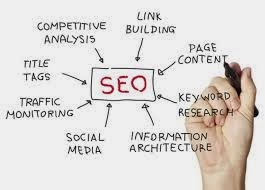
What Is Search Engine Optimization?

Search Engine Optimization (SEO) is something that many people have heard of but few people really and truly understand. This is very unfortunate because as an internet marketer one of the best things you can do for your business is to thoroughly understand what Search Engine Optimization means and how you can go about becoming an expert at it.

The single biggest way that Search Engine Optimization will help you is in generating targeted traffic for your website. Not just traffic mind you, but targeted traffic. This means that people that visit your website will actually be looking for what it is you have to offer and you can probably understand conceptually how that is going to be much better for you than non-targeted traffic. In addition, if you have a website that is properly optimized for use in the search engines you are going to save money because you will not need to spend as much on other methods of traffic generation like pay per click advertising.

Now that you understand how Search Engine Optimization is going to be useful to you it is time to get into some of the basics of the SEO process. There are generally two parts to SEO that you want to be aware of, “on-page” optimization factors and “off-page” optimization factors.

On-page optimization factors are things that you can change on your website in order to make the website more friendly to search engines. These are things like keyword density within paragraphs as well as keyword placement within the title of the webpage, Meta tags and the bolding, underline and italicizing of keywords within the webpage. These are all factors that affect how search engines view your webpage and getting these just right is one of the keys to proper Search Engine Optimization.

While onpage factors are important, anyone that has done SEO work before will be able to tell you that it is the off-page optimization factors that really make the search engines love your page. In terms of off-page optimization, the primary thing I’m talking about is link building. Whenever another website links to your page they are in effect casting a vote in favor of what your page has to offer. The more websites that link to your page, the more votes you get and therefore the more favorably many of the search engines look at your website. There are entire online courses dedicated to the concept of link building as it is truly one of the most important parts of proper Search Engine Optimization and if you get just one part of the whole picture right; make sure it’s this part.

Recent trends in Search Engine Optimization have been set in by a lot of search engines in order to combat the “black hat” techniques many dishonest marketers have been using in order to get their websites good rankings. These trends have made it much more difficult to get your site well-ranked in search engines and indeed it can take months before you even get a sniff of the top. One way to combat this is to use blog posts regularly or make entries on web 2.0 sites (Craigslist, Digg etc.) as these posts get indexed on a daily basis by search engines. You can then place links on those posts that point back to your website and get it indexed that way.

SEO in 2013 also looks like it’s giving way to SMO (Social Media Optimization). With the growth of social networking sites like MySpace, Facebook etc, it’s important to increase the interactivity of your site by offering integration with social networking technologies. This will help your site in search engine rankings as web 2.0 gathers momentum.

There are a number of ways to make Search Engine Optimization work with you and one of the keys in doing so is to be creative. You can never rely on the search engines making it easy for you and for that simple reason you need to be continually thinking of new and innovative ways to get your websites indexed and placed high in search engines. In many different ways it is really you that determines the potential of your site.